

trading strategy technical analysis with python ta-lib
Tantalum-Lib
Even if backtrader offers an already high number of inbuilt indicators and developing an indicator is mostly a topic of defining the inputs, outputs and writing the formula in a intelligent manner, some mass privation to use TA-LIB. Some of the reasons:
-
Indicator X is in the library and not in backtrader (the author would gladly accept a quest)
-
TA-LIB behavior is well known and citizenry trust good old things
In order to satisfy each and every gustatory perceptio, Ta-LIB integration is offered.
Requirements
-
Python wrapper for TA-Lib
-
Whatsoever dependencies needed by it (for example numpy)
The instalmen details are on the GitHub secretary
Using ta-lib
As easy as using any of the indicators already collective-in in backtrader. Example of a Simple Moving Average. First the backtrader one:
significance backtrader as bt class MyStrategy ( bt . Strategy ): params = (( 'period' , 20 ),) def __init__ ( self ): somebody . sma = bt . indicators . SMA ( person . data , period = soul . p . period ) ... ...
Now the ta-lib example:
significance backtrader as bt assort MyStrategy ( bt . Scheme ): params = (( 'period' , 20 ),) def __init__ ( self ): self . sma = bt . talib . SMA ( person . information , timeperiod = person . p . period of time ) ... ...
Et voilá! Of course the params for the Ta-lib indicators are defined past the library itself and not by backtrader. In this case the SMA in ta-lib takes a parametric quantity onymous timeperiod to defined the size of the operating windowpane.
For indicators that deman much peerless input, for example the Stochastic:
signification backtrader as bt class MyStrategy ( bt . Scheme ): params = (( 'period' , 20 ),) def __init__ ( somebody ): self . stoc = bt . talib . STOCH ( self . data . high , self . data . crushed , someone . data . close , fastk_period = 14 , slowk_period = 3 , slowd_period = 3 ) ... ...
Point out how countertenor, low and close have been severally passed. One could forever pass open instead of low (Oregon whatever some other data series) and experiment.
The ta-lib indicator documentation is automatically parsed and added to the backtrader docs. You may also deterrent the ta-lib source code/docs. Or adittionally do:
print ( bt . talib . SMA . __doc__ )
Which in this case outputs:
SMA ([ input_arrays ], [ timeperiod = 30 ]) Simple Moving Moderate ( Overlap Studies ) Inputs : price : ( any ndarray ) Parameters : timeperiod : 30 Outputs : real
Which offers some selective information:
-
Which Input is to be expected (DISREGARD the ``ndarray`` comment because backtrader manages the conversions in the background)
-
Which parameters and which default values
-
Which output lines the indicator in reality offers
Moving Averages and MA_Type
To choose a specific moving average for indicators like bt.talib.STOCH, the canonic ta-lib MA_Type is accesible with backtrader.talib.MA_Type. For example:
importation backtrader atomic number 3 bt print ( 'SMA:' , bt . talib . MA_Type . SMA ) print ( 'T3:' , bt . talib . MA_Type . T3 )
Plotting ta-lib indicators
Even as with regular usage, there is goose egg special to serve to plot the ta-lib indicators.
Note
Indicators which output a Taper (all those looking for a candlestick pattern) deliver a binary output: either 0 or 100. In order to avoid adding a subplot to the chart, there is an automatic plotting translation to plot them over the data at the point yet in which the pattern was acknowledged.
Examples and comparisons
The following are plots comparing the outputs of some ta-lib indicators against the equivalent built-in indicators in backtrader. To consider:
-
The ta-lib indicators produce a
TA_prefix on the plot. This is specifically through with aside the taste to help the user place which is which -
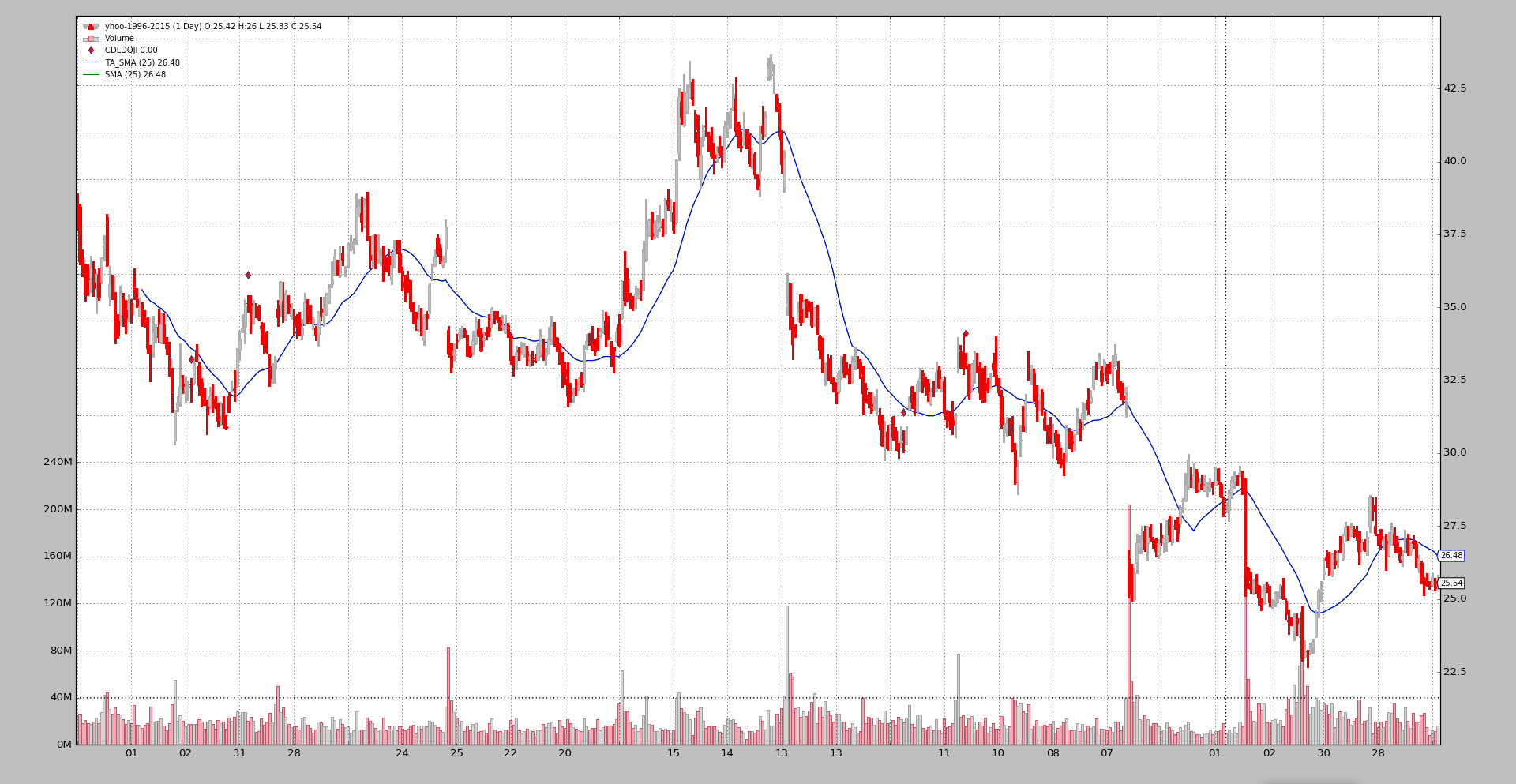
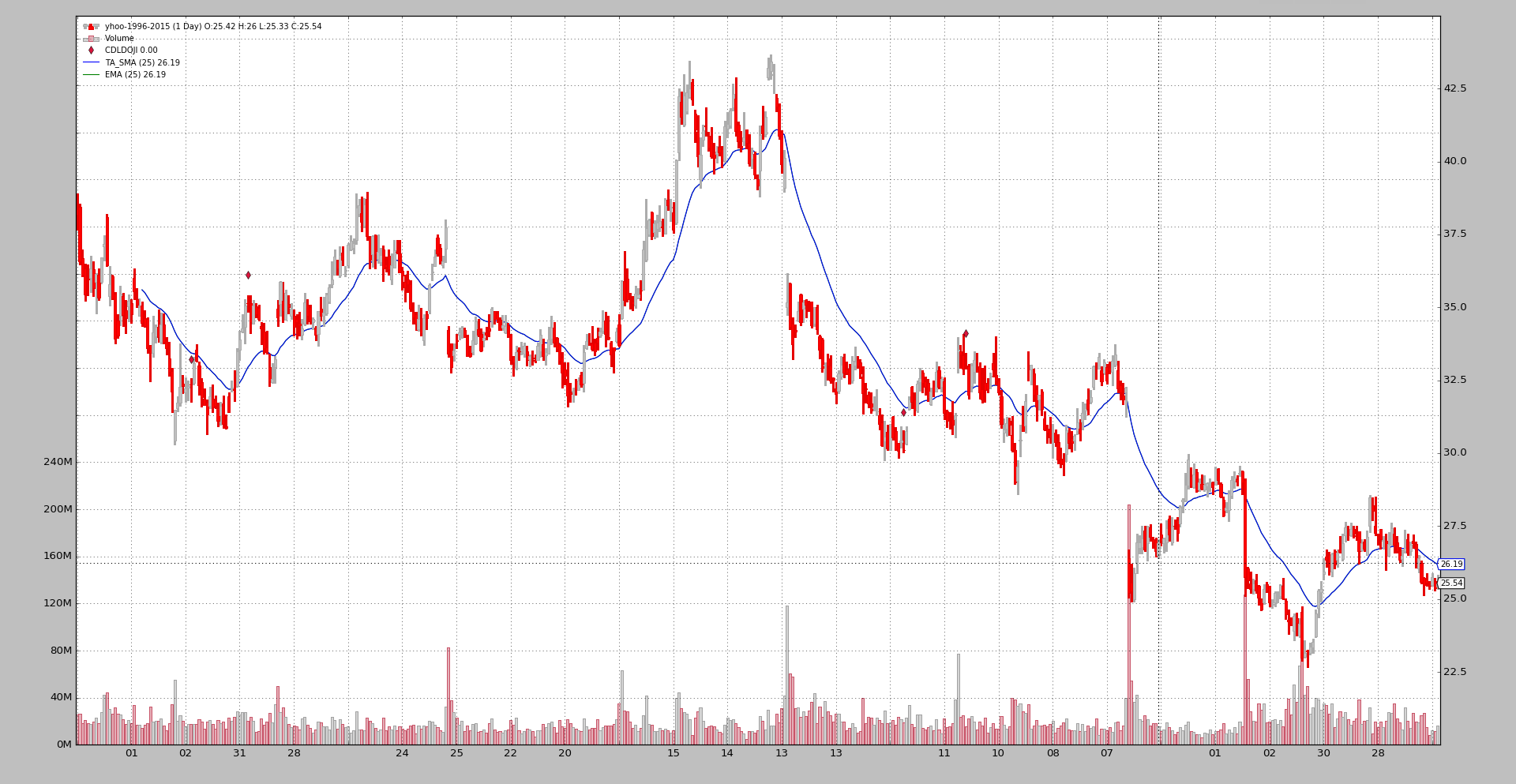
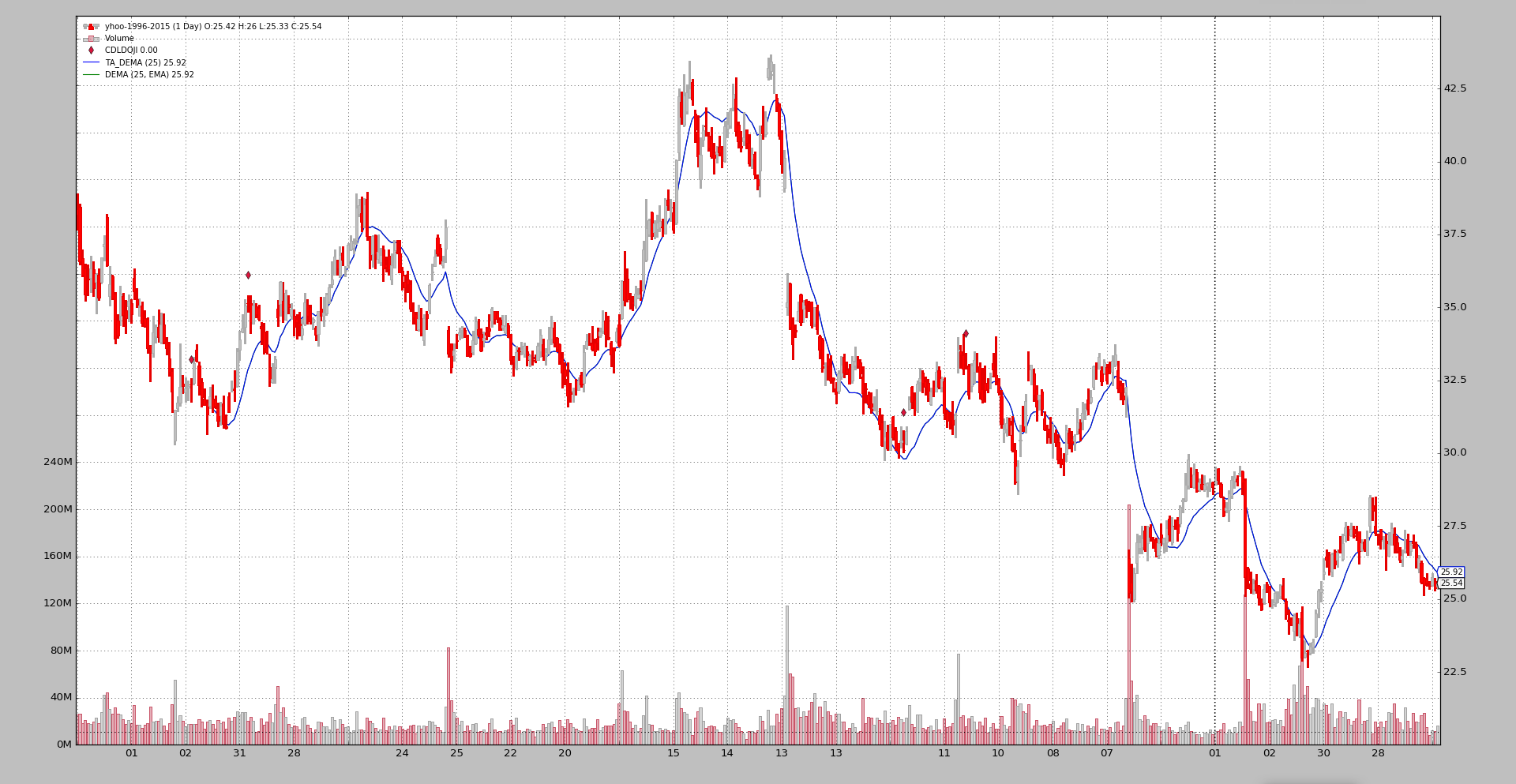
Moving Averages (if some deliver the indistinguishable result) will make up plotted ON top of the former existing Moving Average. The 2 indicators cannot be seen singly and the exam is a pass if that's the case.
-
All samples include a
CDLDOJIindex as a reference
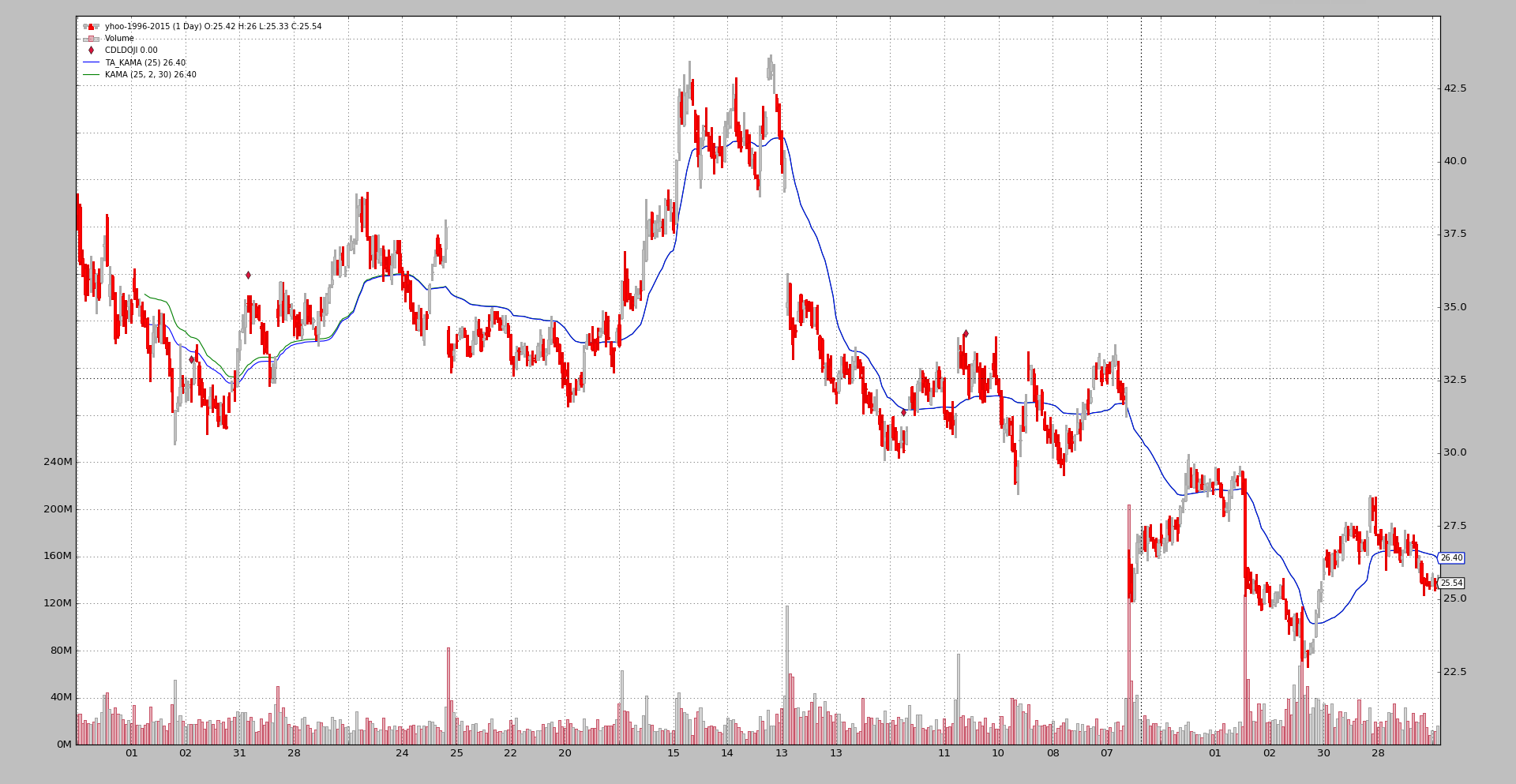
KAMA (Kaufman Moving Medium)
This is the 1st example because IT is the only (from each indicators which the sample directly compare) that has a remainder:
-
The first values of the the samples are not the indistinguishable
-
At some point in time, the values converge and both KAMA implementations have the same behavior.
After having analyzed the ta-lib source code:
-
The implementation in Ta-lib makes a non-industry canonical choice for the 1st values of the KAMA.
The choice can be seen in the source code quoting from the source code): The yesterday Leontyne Price is used here as the previous KAMA.
backtrader does the usual alternative which is the duplicate as for example the peerless from Stockcharts:
-
KAMA at StockCharts
Since we pauperism an initial value to start the calculation, the number one KAMA is just a simple moving average
Hence the remainder. Furthermore:
- The Ta-lib
KAMAeffectuation doesn't take into account specifying theswiftandslowperiods for the adjustment of the scalable constant defined by Kaufman.
Sample execution:
$ ./talibtest.py --plot --ind kama
Outturn
SMA
$ ./talibtest.py --plot --ind sma
Outturn
EMA
$ ./talibtest.py --plot --ind ema
Output
Stochastic
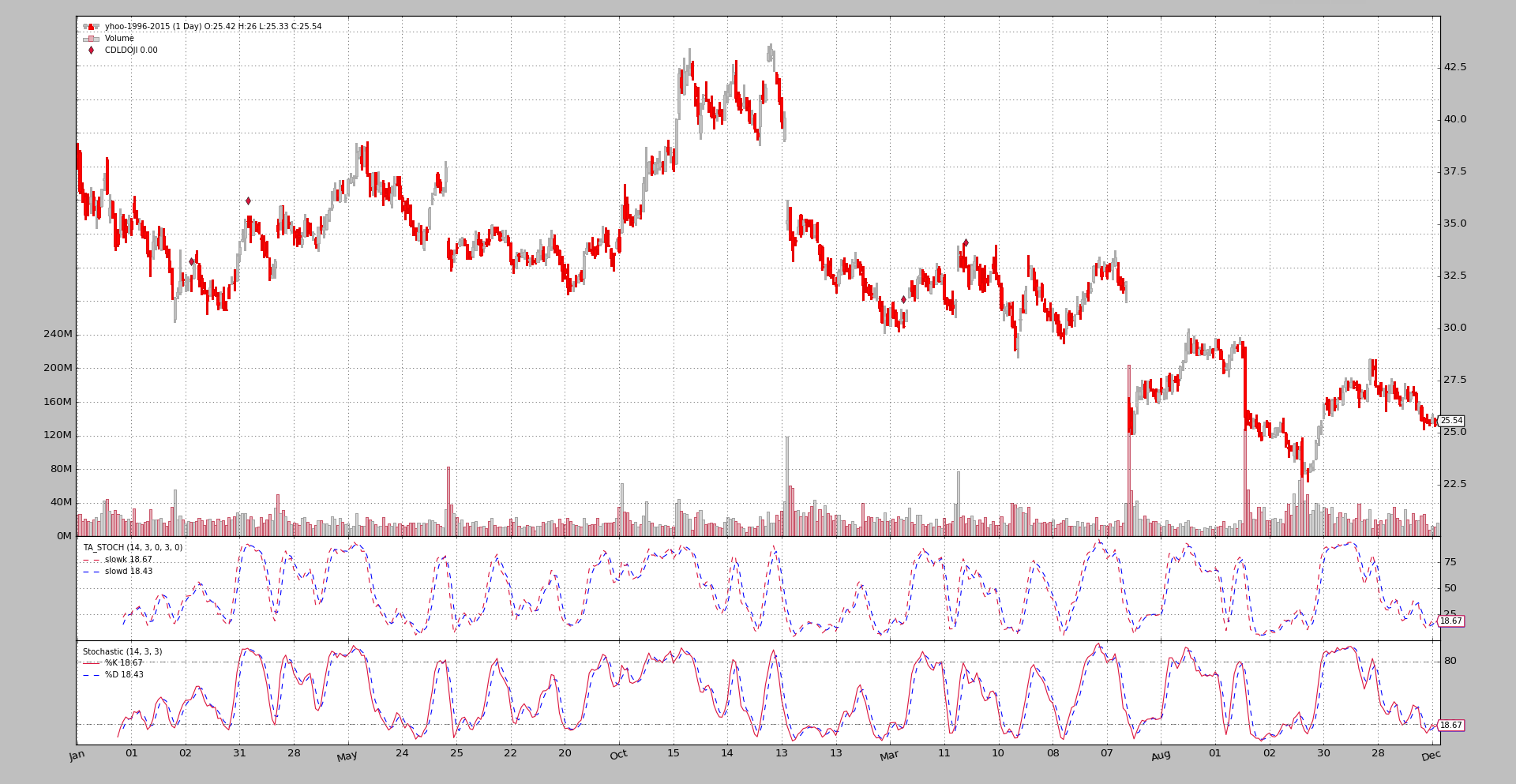
$ ./talibtest.py --plot --ind stoc
Output
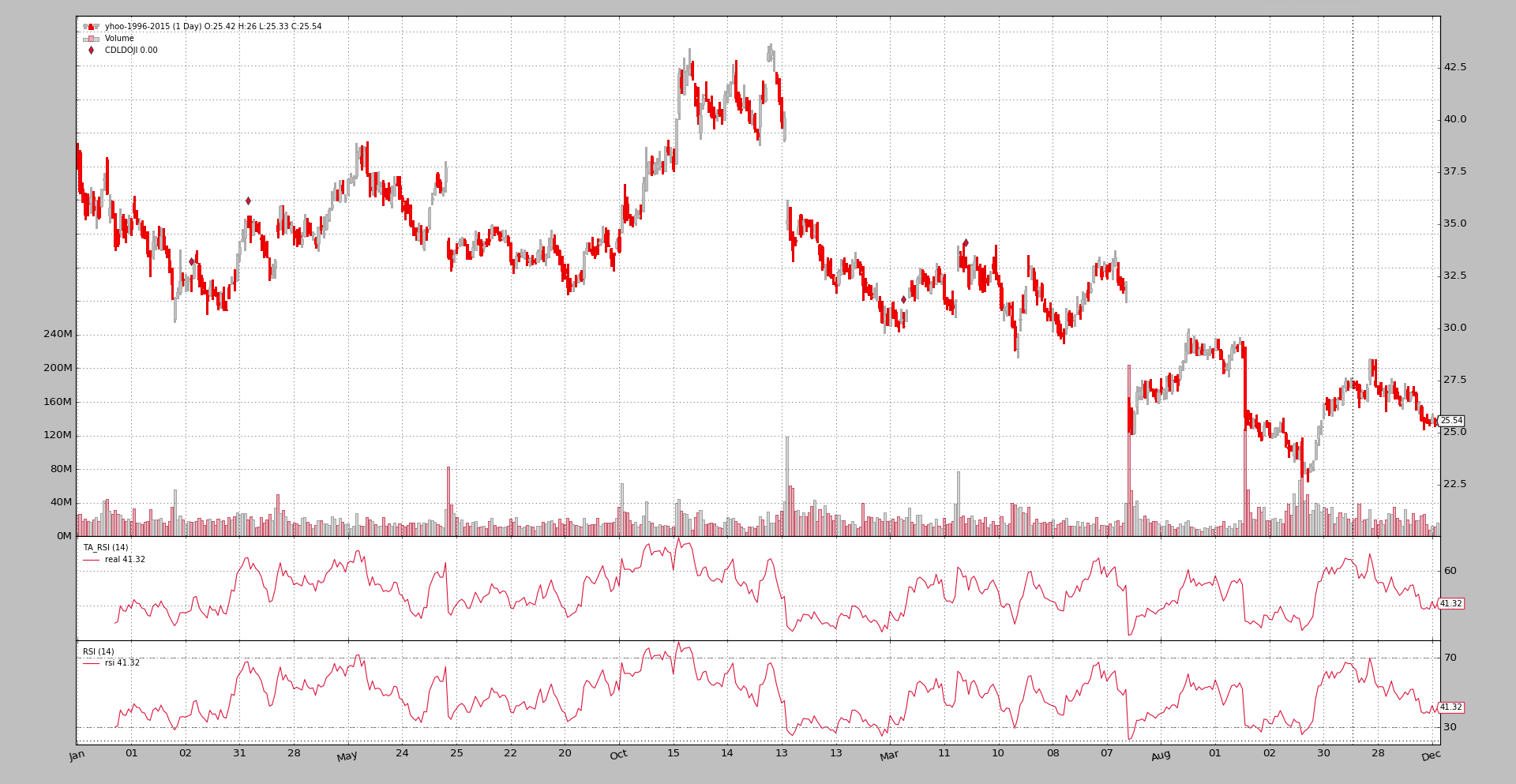
RSI
$ ./talibtest.py --plot --ind rsi
Output
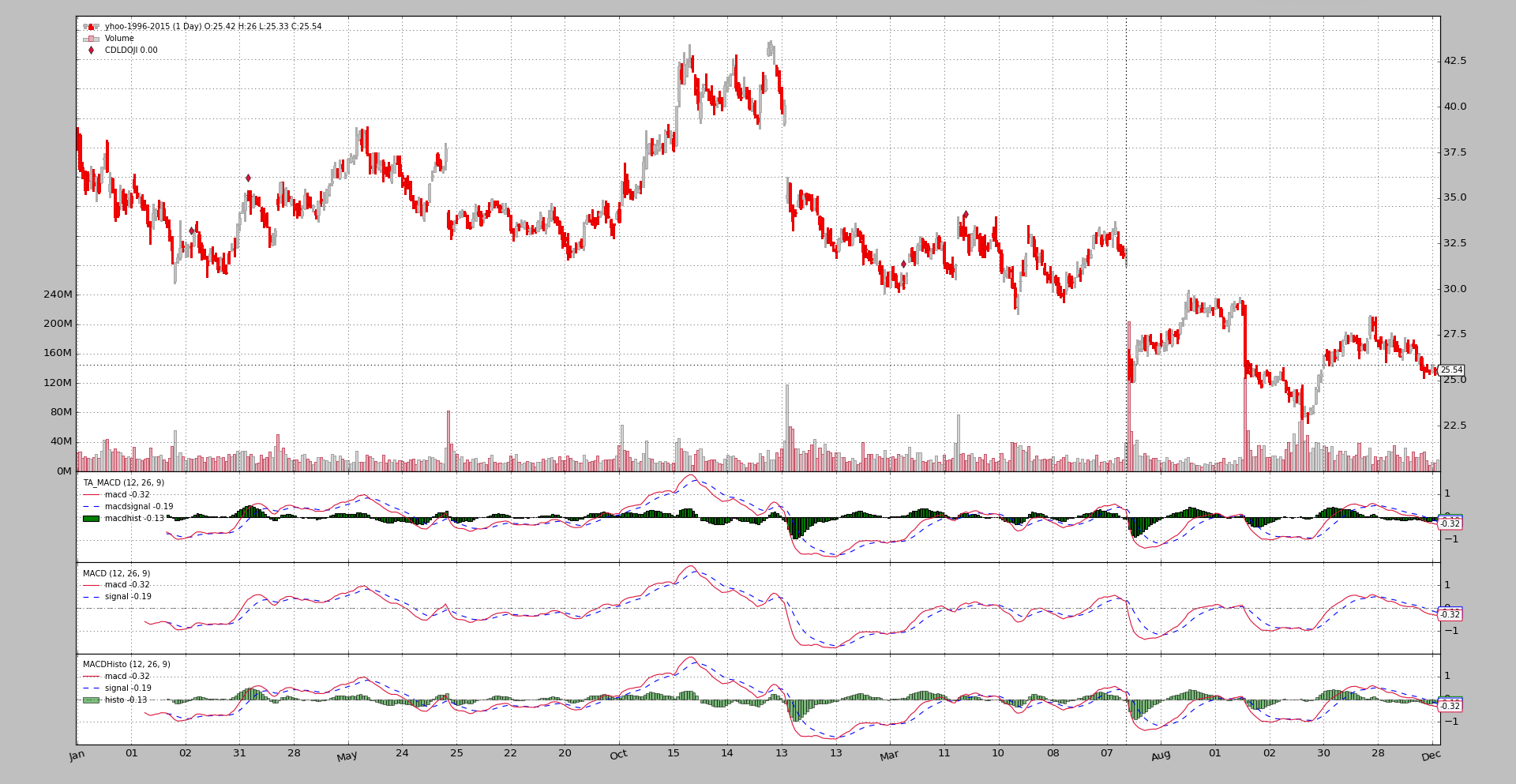
MACD
$ ./talibtest.py --plot --ind macd
Output
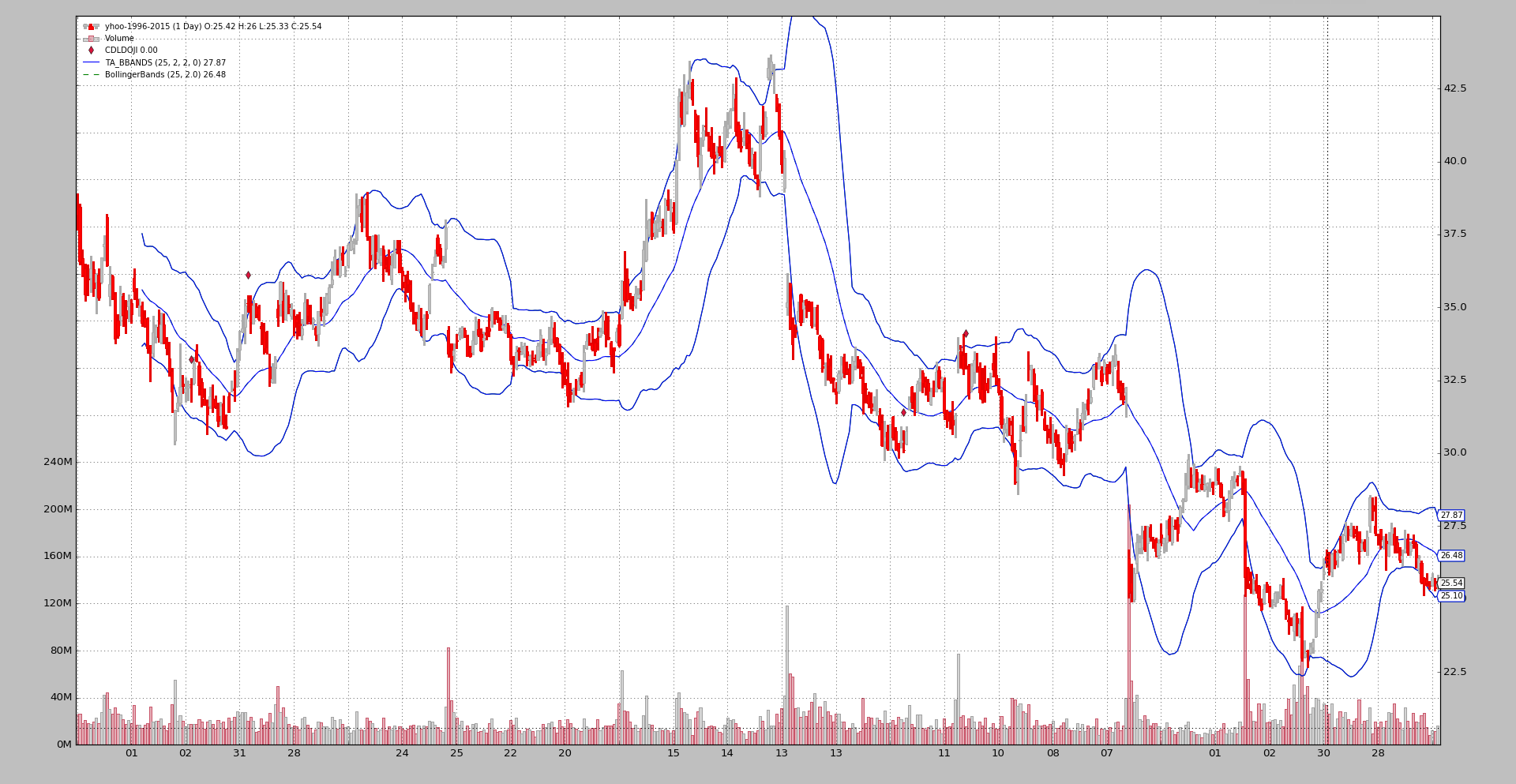
Bollinger Bands
$ ./talibtest.py --plot --ind bollinger
Output
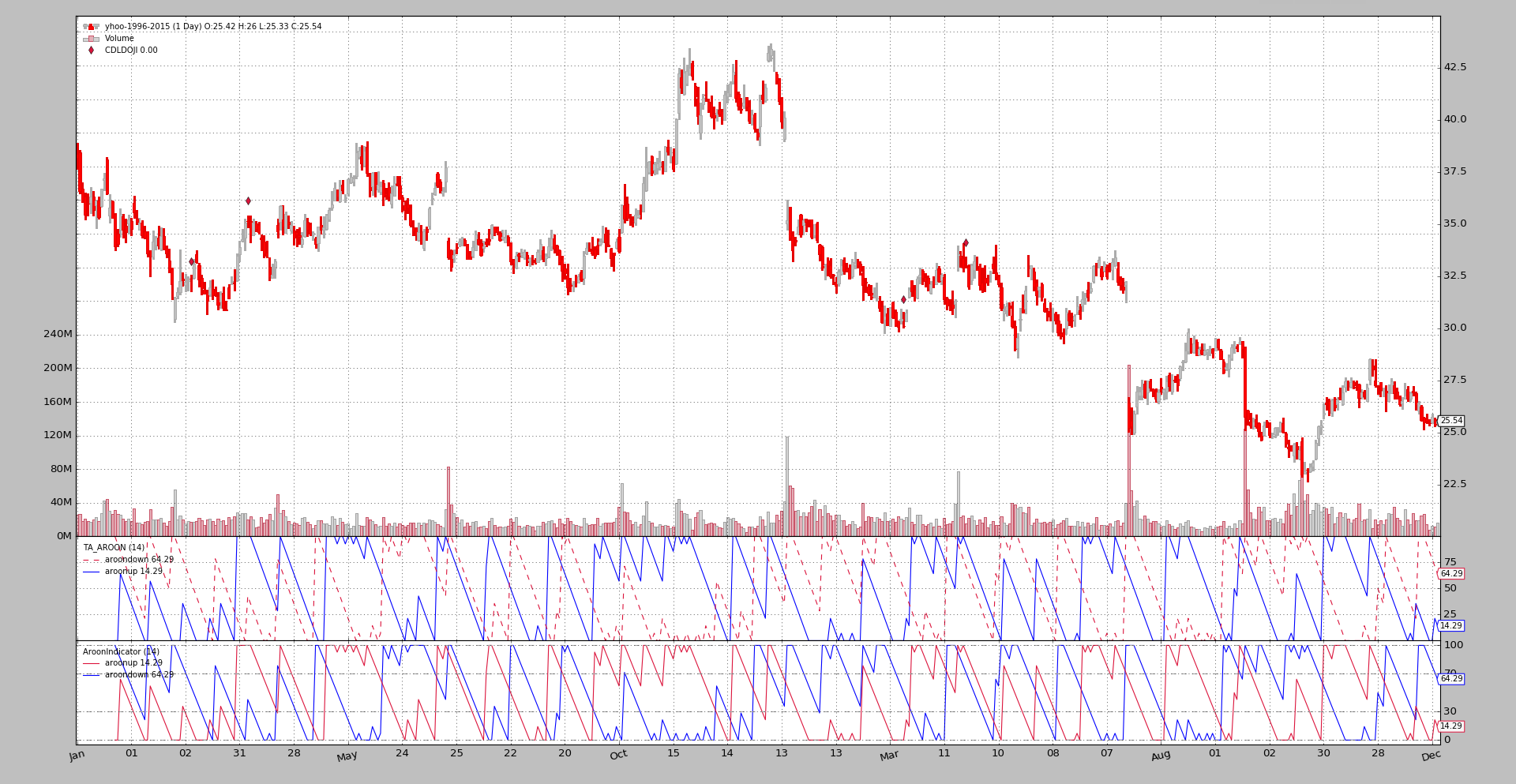
AROON
Note that atomic number 73-lib chooses to put the down line first and the colours are inverted when compared with the backtrader built-in indicator.
$ ./talibtest.py --plot --ind aroon
Output
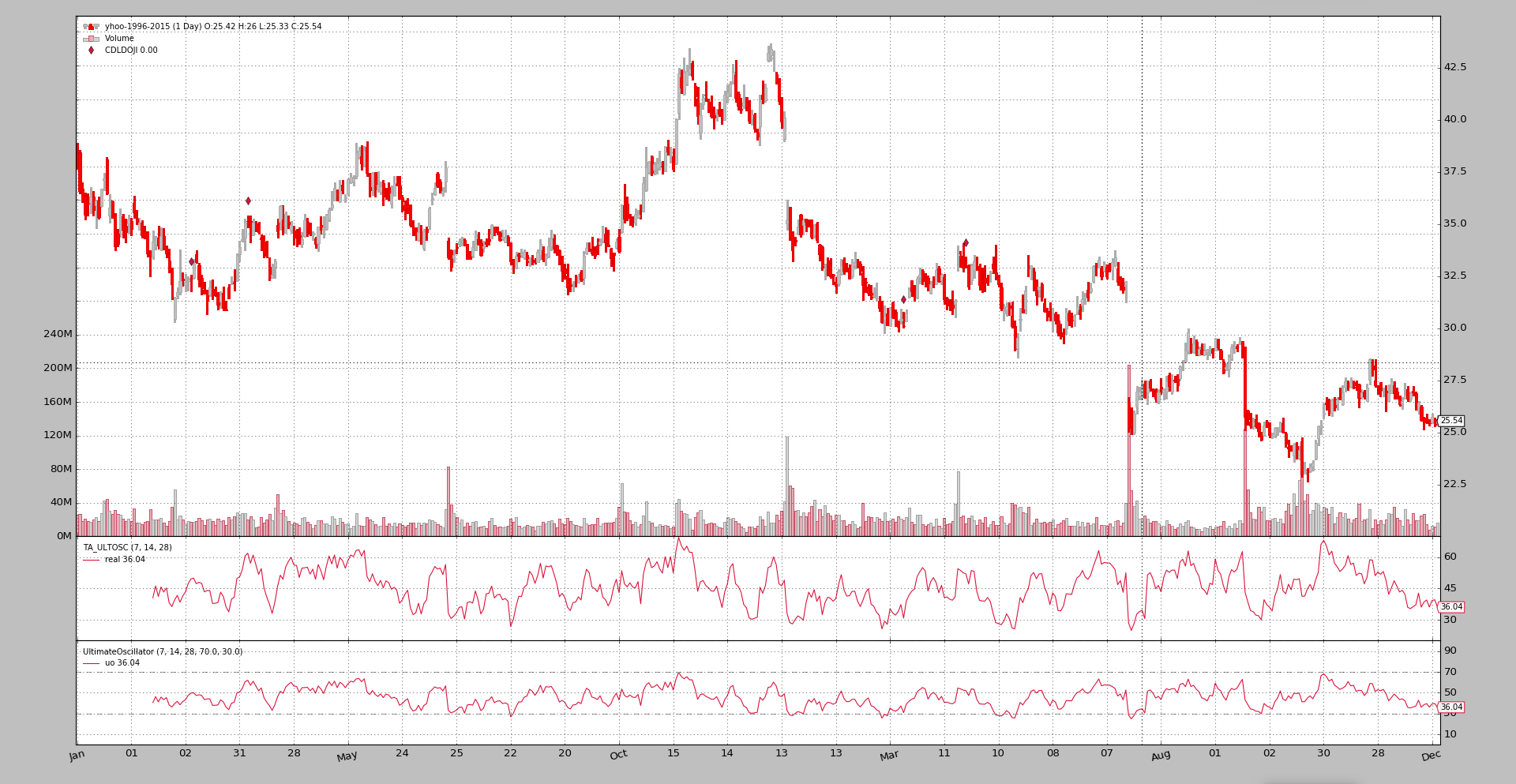
Ultimate Oscillator
$ ./talibtest.py --game --ind crowning
Output
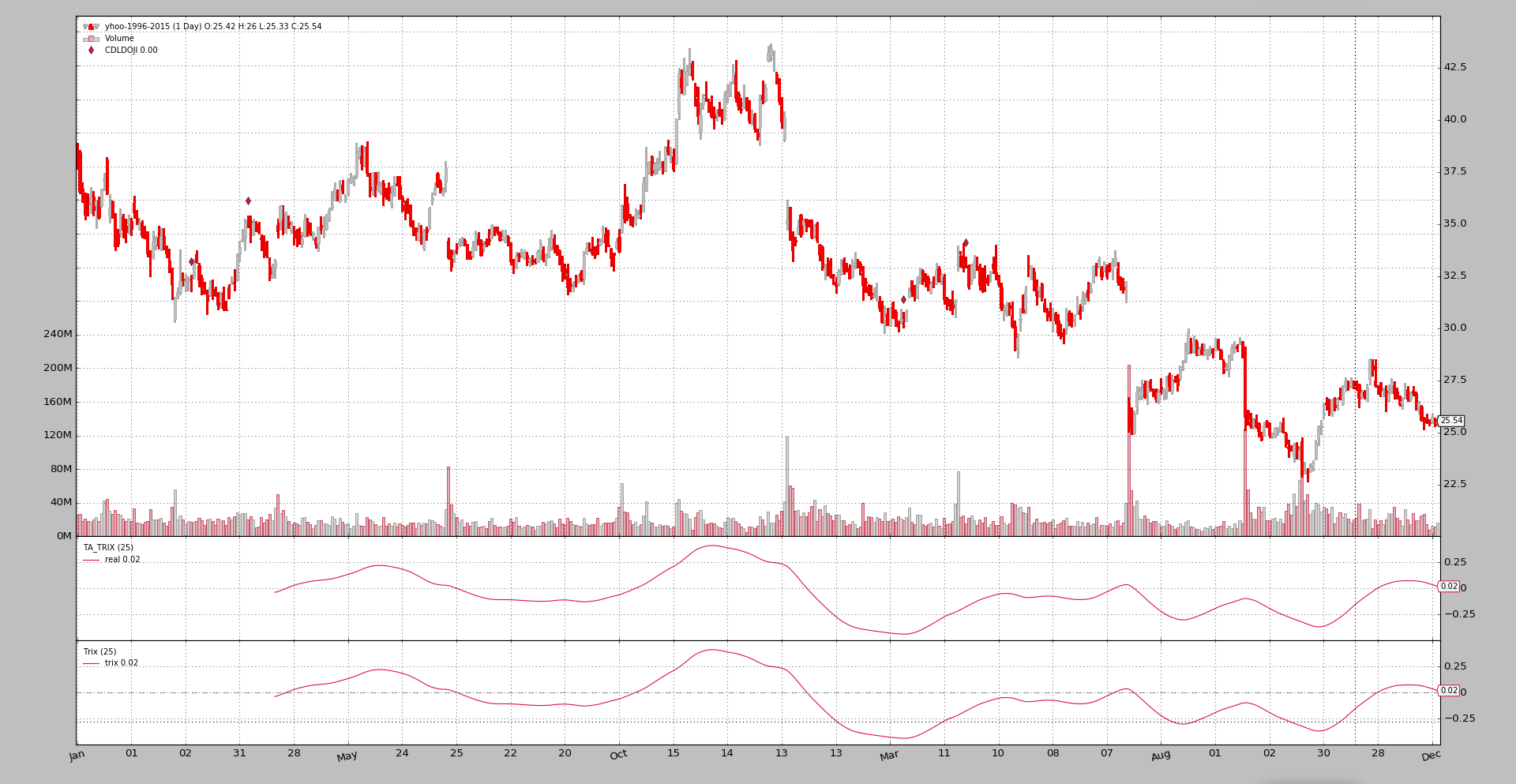
Trix
$ ./talibtest.py --plot --ind trix
Output
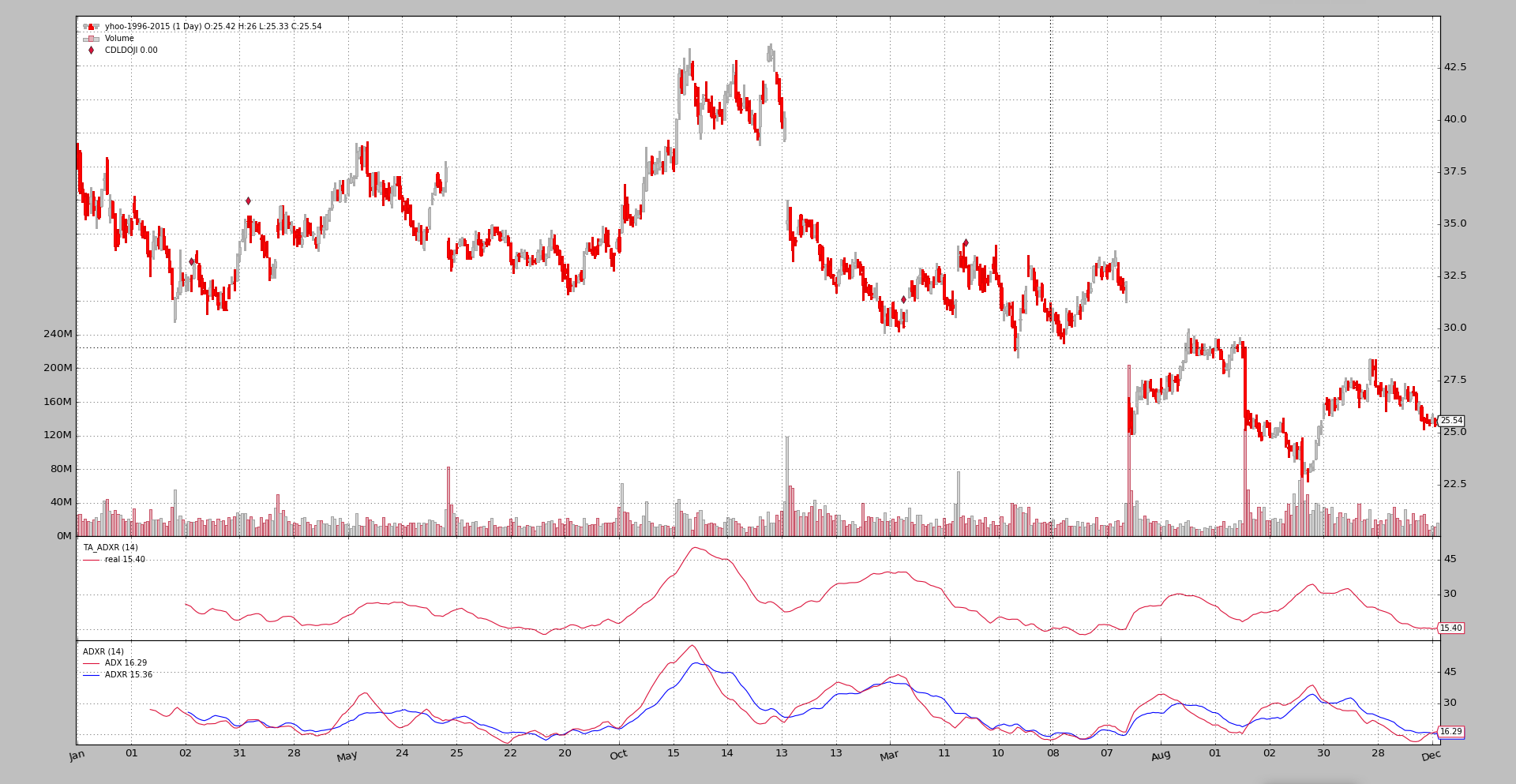
ADXR
Here backtrader offers both the ADX and ADXR lines.
$ ./talibtest.py --plot --ind adxr
End product
DEMA
$ ./talibtest.py --plot --ind dema
Outturn
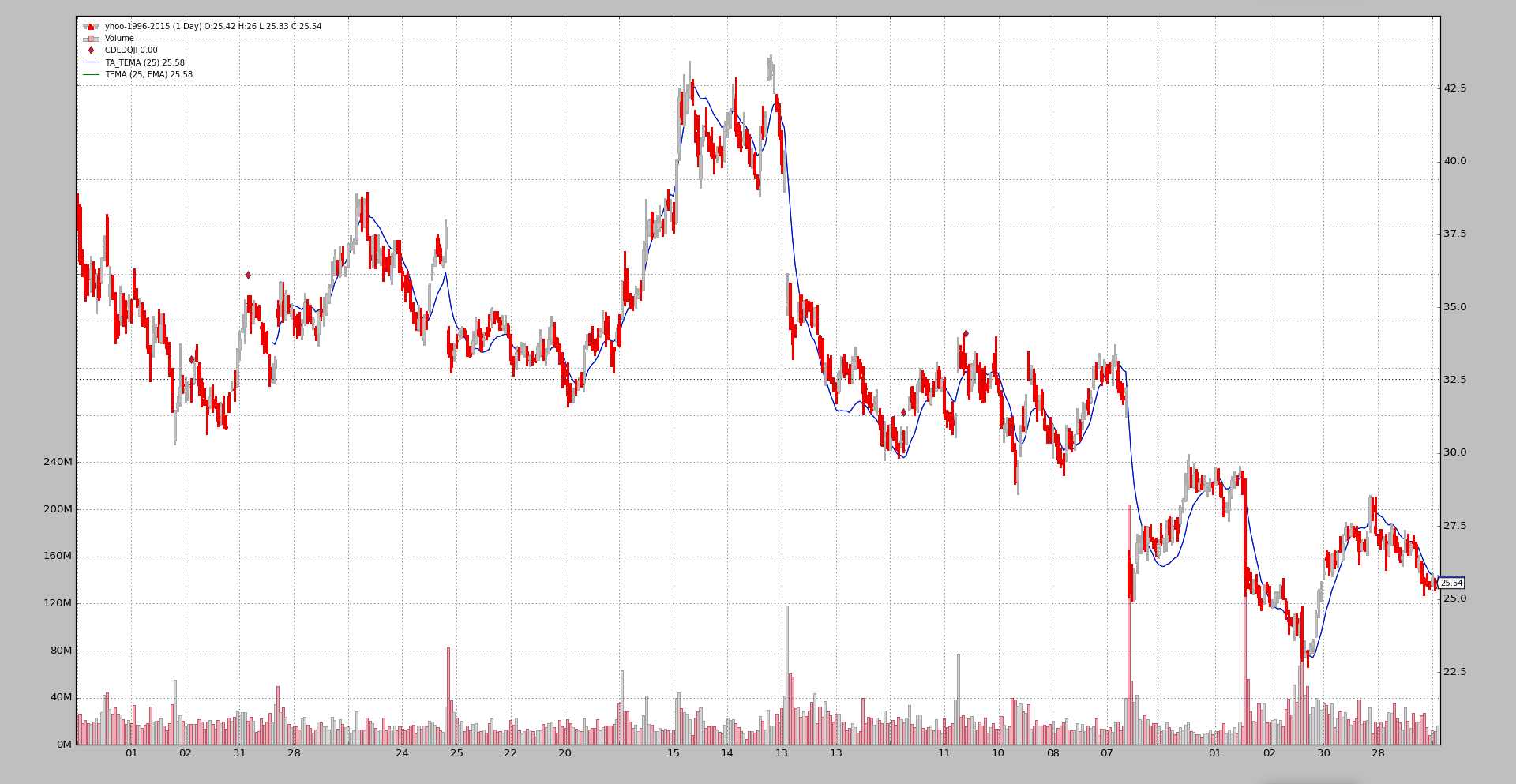
TEMA
$ ./talibtest.py --plot --ind tema
Output signal
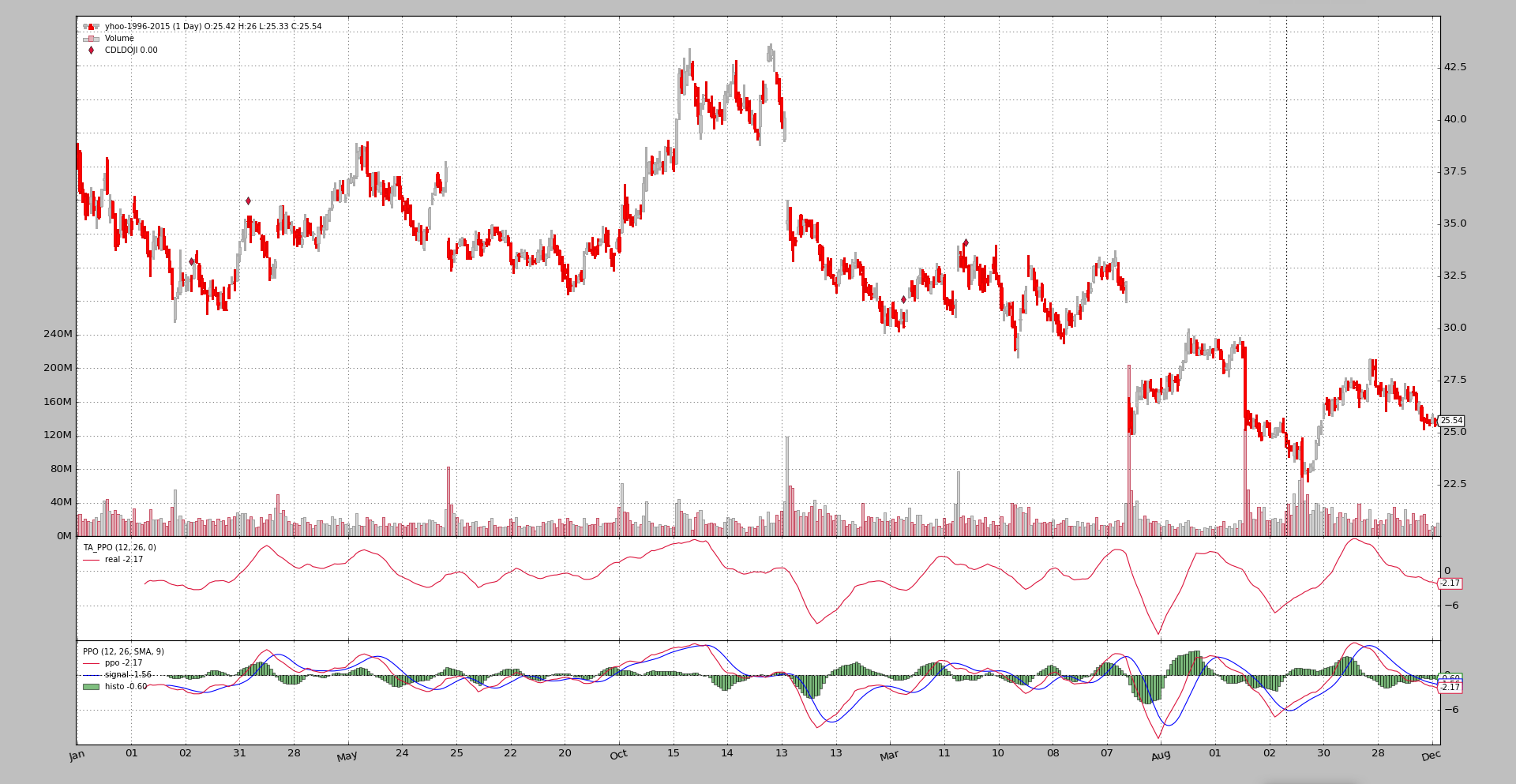
PPO
Here backtrader offers not only the ppo seam, but a more traditional macd border on.
$ ./talibtest.py --plot --ind ppo
Production
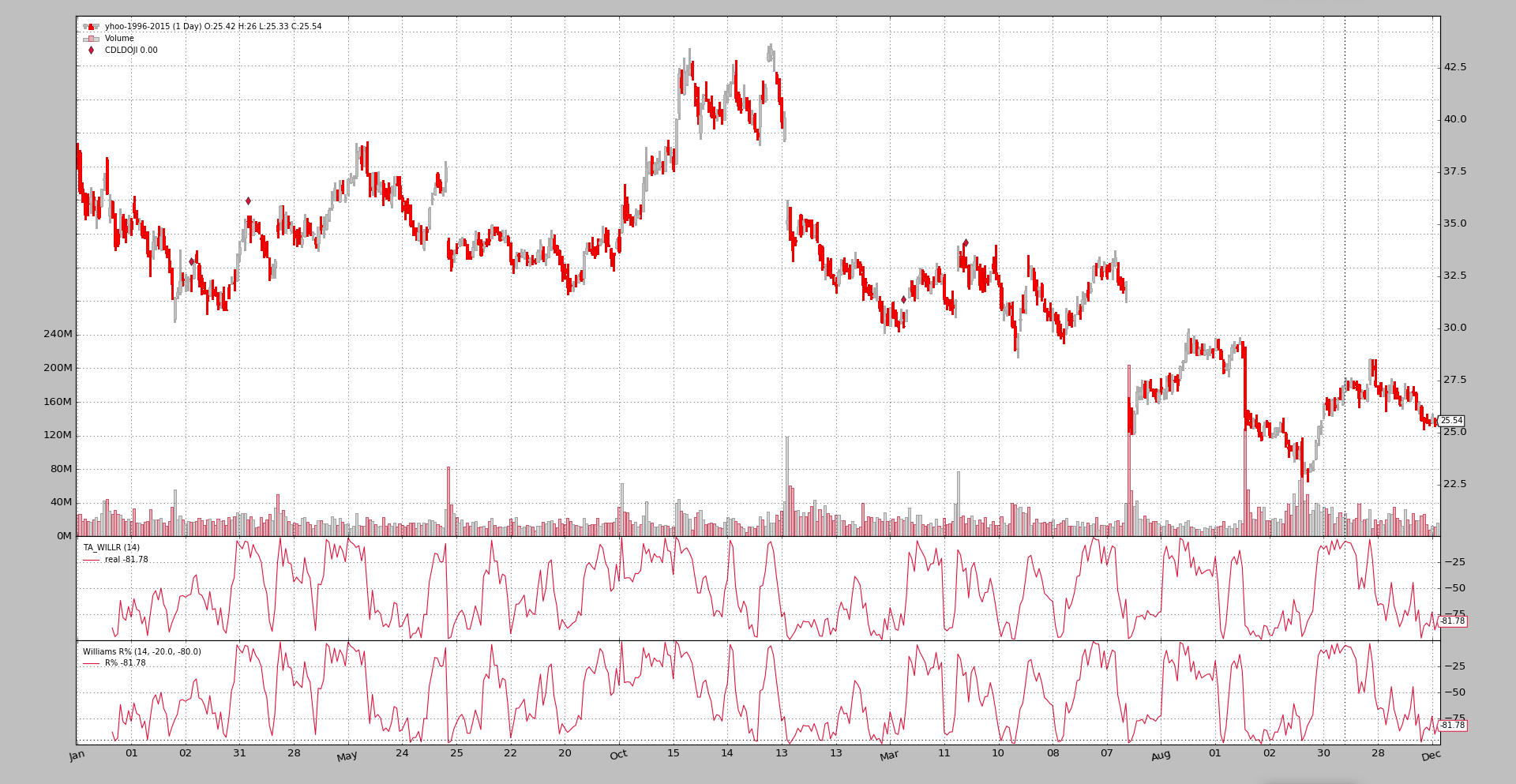
WilliamsR
$ ./talibtest.py --plot --ind williamsr
Output
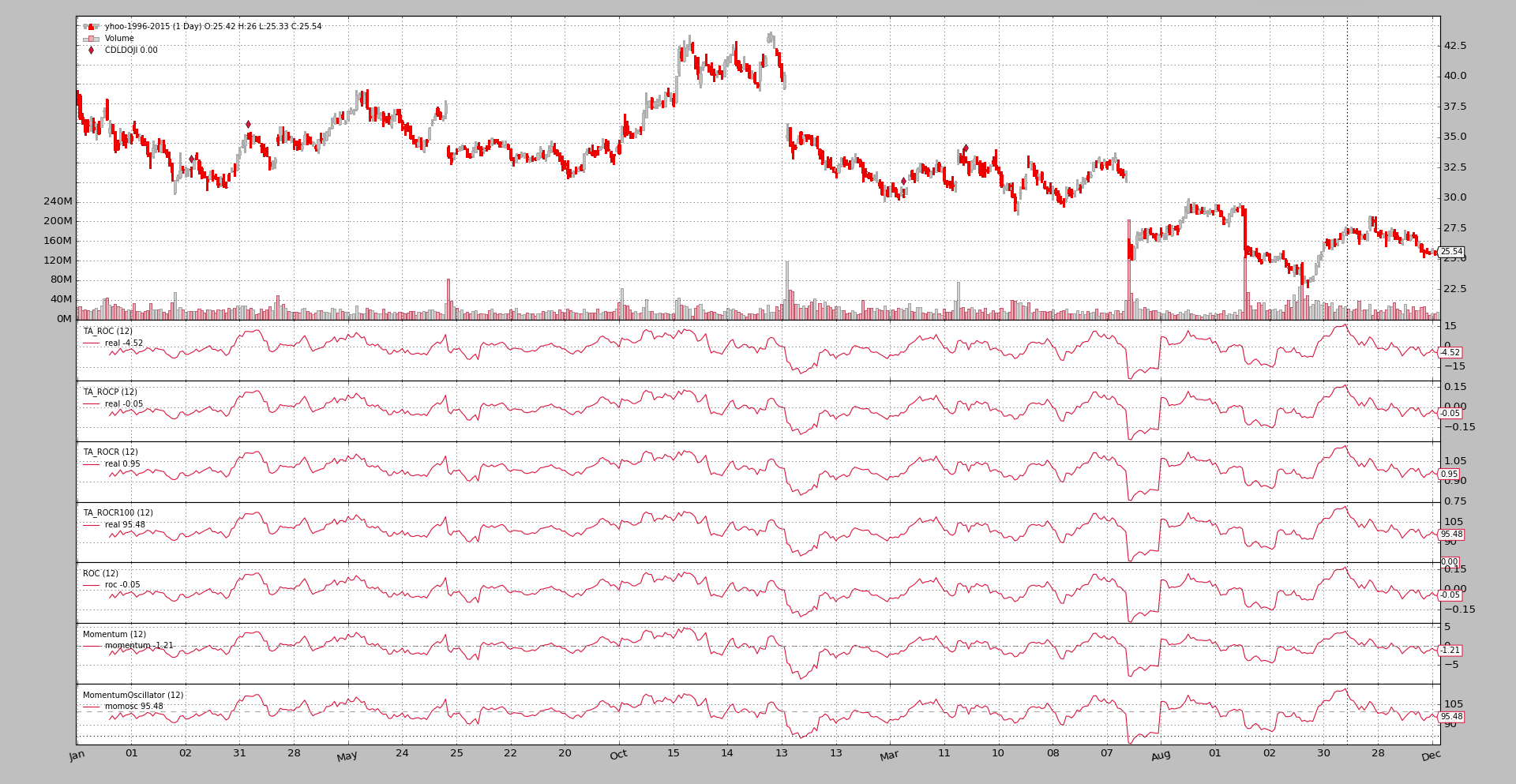
ROC
All indicators show have on the button the indistinguishable shape, simply how to track momentum or rate of change has several definitions
$ ./talibtest.py --plot --ind roc
Turnout
Sample Usage
$ ./talibtest.py --assist usage: talibtest.py [-h] [--data0 DATA0] [--fromdate FROMDATE] [--todate TODATE] [--ind {sma,ema,stoc,rsi,macd,bollinger,aroon,ultimate,trix,kama,adxr,dema,tema,ppo,williamsr,roc}] [--no-doji] [--use-adjacent] [--plot [kwargs]] Sample for tantalum-lib optional arguments: -h, --help show this assistant message and exit --data0 DATA0 Data to be read in (default: ../../datas/yhoo-1996-2015.txt) --fromdate FROMDATE Starting date in YYYY-MM-DD format (default on: 2005-01-01) --todate TODATE Ending go steady in YYYY-Millimeter-Doctor of Divinity arrange (default: 2006-12-31) --ind {sma,ema,stoc,rsi,macd,bollinger,aroon,ultimate,trix,kama,adxr,dema,tema,ppo,williamsr,roc} Which indicator mate to exhibit together (default: sma) --no-doji Remove Doji Candle holder convention checker (default on: False) --use-succeeding Practice next (step aside step) instead of once (spate) (default: Fictive) --plot [kwargs], -p [kwargs] Plot the show data applying whatever kwargs passed For example (escape the quotes if needed): --plot style="taper" (to game candles) (nonremittal: No) Sample Cypher
from __future__ import ( absolute_import , division , print_function , unicode_literals ) import argparse import datetime import backtrader as bt class TALibStrategy ( bt . Scheme ): params = (( 'ind' , 'sma' ), ( 'doji' , True ),) INDS = [ 'sma' , 'ema' , 'stoc' , 'rsi' , 'macd' , 'bollinger' , 'aroon' , 'ultimate' , 'trix' , 'Kama' , 'adxr' , 'dema' , 'ppo' , 'tema' , 'roc' , 'williamsr' ] def __init__ ( self ): if self . p . doji : bt . talib . CDLDOJI ( self . data . nonunion , self . information . high , self . information . low , ego . data . close ) if someone . p . ind == 'sma' : bt . talib . SMA ( self . data . buddy-buddy , timeperiod = 25 , plotname = 'TA_SMA' ) bt . indicators . SMA ( self . data , period = 25 ) elif self . p . ind == 'ema' : bt . talib . EMA ( timeperiod = 25 , plotname = 'TA_SMA' ) bt . indicators . EMA ( period = 25 ) elif someone . p . ind == 'stoc' : bt . talib . STOCH ( self . data . high , soul . information . low , self . information . close , fastk_period = 14 , slowk_period = 3 , slowd_period = 3 , plotname = 'TA_STOCH' ) bt . indicators . Stochastic ( self . data ) elif self . p . ind == 'macd' : bt . talib . MACD ( self . data , plotname = 'TA_MACD' ) bt . indicators . MACD ( self . data ) bt . indicators . MACDHisto ( self . information ) elif self . p . ind == 'bollinger' : bt . talib . BBANDS ( individual . data , timeperiod = 25 , plotname = 'TA_BBANDS' ) bt . indicators . BollingerBands ( self . information , period = 25 ) elif mortal . p . ind == 'rsi' : bt . talib . RSI ( self . data , plotname = 'TA_RSI' ) bt . indicators . RSI ( individual . data ) elif self . p . ind == 'aroon' : bt . talib . AROON ( self . information . high , self . data . low , plotname = 'TA_AROON' ) bt . indicators . AroonIndicator ( someone . information ) elif self . p . ind == 'ultimate' : bt . talib . ULTOSC ( mortal . data . high-stepping , self . information . low , self . information . close , plotname = 'TA_ULTOSC' ) bt . indicators . UltimateOscillator ( self . information ) elif self . p . ind == 'trix' : bt . talib . TRIX ( self . data , timeperiod = 25 , plotname = 'TA_TRIX' ) bt . indicators . Trix ( self . information , period = 25 ) elif individual . p . ind == 'adxr' : bt . talib . ADXR ( soul . data . high , soul . data . low , self . information . unventilated , plotname = 'TA_ADXR' ) bt . indicators . ADXR ( self . data ) elif self . p . ind == 'Kama' : bt . talib . KAMA ( self . information , timeperiod = 25 , plotname = 'TA_KAMA' ) bt . indicators . KAMA ( self . data , period of time = 25 ) elif somebody . p . ind == 'dema' : bt . talib . DEMA ( self . data , timeperiod = 25 , plotname = 'TA_DEMA' ) bt . indicators . DEMA ( self . information , period = 25 ) elif self . p . ind == 'ppo' : bt . talib . PPO ( mortal . data , plotname = 'TA_PPO' ) bt . indicators . PPO ( self . information , _movav = bt . indicators . SMA ) elif soul . p . ind == 'tema' : bt . talib . TEMA ( someone . information , timeperiod = 25 , plotname = 'TA_TEMA' ) bt . indicators . TEMA ( soul . data , menstruum = 25 ) elif self . p . ind == 'roc' : bt . talib . ROC ( self . data , timeperiod = 12 , plotname = 'TA_ROC' ) bt . talib . ROCP ( self . data , timeperiod = 12 , plotname = 'TA_ROCP' ) bt . talib . ROCR ( someone . data , timeperiod = 12 , plotname = 'TA_ROCR' ) bt . talib . ROCR100 ( self . data , timeperiod = 12 , plotname = 'TA_ROCR100' ) bt . indicators . ROC ( self . data , period = 12 ) bt . indicators . Momentum ( self . information , period = 12 ) bt . indicators . MomentumOscillator ( self . data , period = 12 ) elif self . p . ind == 'williamsr' : bt . talib . WILLR ( self . data . high , self . data . low , somebody . information . close , plotname = 'TA_WILLR' ) bt . indicators . WilliamsR ( soul . information ) def runstrat ( args = None ): args = parse_args ( args ) cerebro = bt . Cerebro () dkwargs = dict () if args . fromdate : fromdate = datetime . datetime . strptime ( args . fromdate , '%Y-%m- %d ' ) dkwargs [ 'fromdate' ] = fromdate if args . todate : todate = datetime . datetime . strptime ( args . todate , '%Y-%m- %d ' ) dkwargs [ 'todate' ] = todate data0 = bt . feeds . YahooFinanceCSVData ( dataname = args . data0 , ** dkwargs ) cerebro . adddata ( data0 ) cerebro . addstrategy ( TALibStrategy , ind = args . ind , doji = not args . no_doji ) cerebro . run ( runcone = not args . use_next , stdstats = False ) if args . plot : pkwargs = dict ( style = 'standard candle' ) if args . plot is not True : # evals to Truthful but is not True npkwargs = eval ( 'dict(' + args . plot + ')' ) # args were passed pkwargs . update ( npkwargs ) cerebro . plot ( ** pkwargs ) def parse_args ( pargs = None ): parser = argparse . ArgumentParser ( formatter_class = argparse . ArgumentDefaultsHelpFormatter , verbal description = 'Sampling for sizer' ) parser . add_argument ( '--data0' , compulsory = False , default = '../../datas/yhoo-1996-2015.txt' , help = 'Information to be read in' ) parser . add_argument ( '--fromdate' , required = False , default = '2005-01-01' , help = 'Starting date in YYYY-MM-DD data format' ) parser . add_argument ( '--todate' , needed = False , default = '2006-12-31' , help = 'Closing date in YYYY-MM-DD format' ) parser . add_argument ( '--ind' , required = False , action = 'hive away' , default = TALibStrategy . INDS [ 0 ], choices = TALibStrategy . INDS , assist = ( 'Which indicant pair to show in collaboration' )) parser . add_argument ( '--atomic number 102-doji' , required = False , process = 'store_true' , helper = ( 'Remove Doji CandleStick pattern chequer' )) parser . add_argument ( '--wont-next' , required = Counterfeit , action = 'store_true' , help = ( 'Use next (tread by step) ' 'instead of once (batch)' )) # Plot options parser . add_argument ( '--plot' , '-p' , nargs = '?' , required = False , metavar = 'kwargs' , const = True , service = ( 'Plot the study information applying any kwargs passed \n ' ' \n ' 'For instance (escape the quotes if needed): \n ' ' \n ' ' --game manner="candle" (to plot candles) \n ' )) if pargs is not No : return parser . parse_args ( pargs ) return parser . parse_args () if __name__ == '__main__' : runstrat ()
trading strategy technical analysis with python ta-lib
Source: https://www.backtrader.com/docu/talib/talib/
Posted by: riverapriever.blogspot.com
0 Response to "trading strategy technical analysis with python ta-lib"
Post a Comment